

Practical skills to learn before graduating from college
Master essential practical skills to learn before graduating from college to bridge the gap between classroom theory and real job market demands.
 Nitesh Roy
8 min read

Key takeaways
- Demonstrate practical projects rather than relying solely on your college GPA.
- Keep your professional emails concise and action-oriented for modern workplaces.
- Master digital task management tools to organize your daily workload efficiently.
- Document your problem-solving process and challenges inside a digital portfolio.
- Use generative AI responsibly to outline research and brainstorm ideas.
On this page
Stepping off the graduation stage is an exciting milestone, but handing in that final term paper is often followed by a harsh reality check. If you want to transition smoothly from the lecture hall to the office, mastering practical skills to learn before graduating from college is just as important as your major. Let us look at what it actually takes to catch a hiring manager’s eye.
Why academic degrees alone leave graduates searching for work
Universities are fantastic for building foundational knowledge, but they operate on a timeline and a set of rules that look nothing like the corporate world. You spend years studying theories, writing long-form essays, and taking multiple-choice exams that have one correct answer. Real-world business problems rarely come with an answer key or a syllabus.
The gap between theoretical exams and workplace problem-solving
When you start your first job, nobody hands you a rubric for the quarter. You will face ambiguous client requests, messy data sets, and shifting project timelines where the definition of success changes daily. College teaches you how to memorize information and analyze historical cases, but companies pay you to diagnose new problems and build solutions on the fly. Bridging this gap requires you to lean into discomfort and practice making decisions with incomplete information.
How hiring managers prioritize demonstrable portfolio projects over GPA
Most recruiters spend less than ten seconds scanning a resume before deciding whether to keep reading or toss it into the virtual recycling bin. A high GPA proves you are diligent and can follow instructions, but a strong portfolio proves you can actually execute. Hiring managers want to see what you have built, tested, and shipped outside of mandatory class assignments. Having tangible artifacts shifts the conversation from your theoretical potential to your proven ability to deliver results.
How to build professional communication habits that stand out
Academic writing rewards length, complex vocabulary, and exhaustive literature reviews to prove you did the reading. The professional world operates on the exact opposite principle where brevity is king. Busy executives and cross-functional partners do not have time to parse three-paragraph emails just to find a simple question.
Writing concise, action-oriented emails for business contexts
Every professional email or Slack message you send should have a clear purpose right from the opening line. State your request immediately, provide only the necessary context, and finish with a specific call to action or next step. If your reader has to scroll or scroll-read to figure out what you need from them, your message has failed. Practice trimming your sentences by half and cutting out filler words like just, actually, and really.
Presenting complex ideas clearly to non-technical stakeholders
Whether you study engineering, marketing, or finance, you will eventually need to explain complicated concepts to people who have no background in your field. Avoid jargon like the plague and rely on relatable analogies to get your point across. If you can explain a technical process to a complete beginner without making them feel lost, you possess a rare superpower that every team leader values.
When explaining a complex project to non-technical teammates, try using the three-part rule: state the core problem in plain English, explain what you did to solve it in one sentence, and highlight the final business impact without using industry jargon.
What project management tools should every student master?
Keeping track of your college coursework usually involves a simple to-do list or keeping due dates memorized in your head. Once you enter a modern workplace, you will find that team collaboration happens across a dozen different cloud apps simultaneously. Knowing how to navigate these digital environments is a non-negotiable foundation internship program requirement for almost any entry-level role you apply for.
Using digital boards to track tasks and personal deliverables
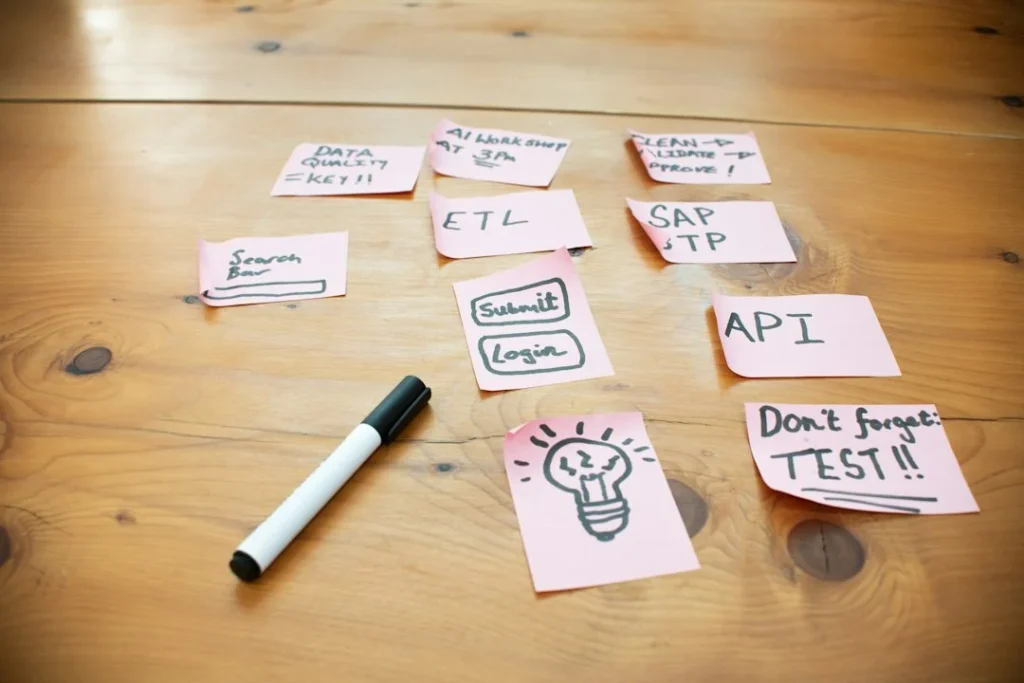
Mastering visual workflow tools like Trello, Notion, or Asana will transform how you manage your daily workload. Break your personal projects down into small, bite-sized tasks and move them across columns from backlog to in-progress and done. This visual momentum not only keeps you organized on busy days but also teaches you how to estimate how long tasks actually take to complete.
Collaborating across teams using cloud-based document sharing
Gone are the days of emailing Word documents back and forth with track changes turned on. Modern teams collaborate in real time using shared workspaces, cloud spreadsheets, and collaborative slide decks. Learn how to manage version history, leave actionable inline comments, and structure documents so that anyone on your team can jump in and understand the current status instantly.
How to leverage generative AI for daily productivity
Artificial intelligence tools are reshaping entry-level workflows across every industry, yet many students treat them like cheating devices rather than productivity boosters. Learning how to collaborate with AI responsibly will give you an immediate edge over peers who view automation as a threat. The goal is not to let technology think for you, but to use it as a tireless junior assistant that accelerates your routine tasks.
Drafting outlines and summarizing long research reports efficiently
When you are staring at a fifty-page industry report or a dense white paper, use language models to extract key themes and generate structured summaries in seconds. You can also use AI to bounce around ideas when you feel stuck on a blank page, building out initial outlines that you then flesh out with your own voice and original research. This keeps you in the driver seat while cutting your initial research time down drastically.
Understanding prompt engineering for brainstorming and code review
Getting useful output from an AI tool is all about how clearly you structure your requests and provide context. Treat every prompt like you are briefing a human intern by defining the role, the target audience, the desired format, and any constraints. You can even paste your code or draft copy into an LLM and ask it to critique your logic or find blind spots you might have missed.
How to package your student projects into a digital portfolio
Your college diploma tells employers what classes you sat through, but a personal website tells them what you are capable of building. When you present your work effectively, you remove all guesswork from the recruiter’s evaluation process. This is one of the most crucial job skills not taught in college that you can build independently in your spare time.
Documenting your process, challenges, and final outcomes
Hiring managers care far more about your journey than they do about a polished final screenshot. Write short case studies for your best student or freelance projects detailing the initial problem, the constraints you faced, the mistakes you made along the way, and how you solved them. Showing vulnerability and resilience tells a much better story about your character than pretending everything went smoothly.
Creating a simple personal website to showcase your artifacts
You do not need to be a full-stack developer or a master designer to put together a clean, professional landing page. Use simple website builders or template platforms to organize your case studies, link to your GitHub repositories, and display your best writing samples. Having your own digital hub gives you a professional anchor to share on your resume and LinkedIn profile.
Step-by-Step Implementation
- Audit your current digital footprint: Review your resume, LinkedIn profile, and public social channels to ensure they highlight practical projects rather than just academic coursework.
- Build a centralized task board: Set up a free project management workspace to track your thesis, capstone projects, and job hunt deliverables in one place.
- Transform one old term paper into a case study: Take a successful college research project and rewrite it into a short, punchy case study focusing on the real-world problem you solved.
- Launch a simple portfolio page: Put together a clean personal website using a straightforward builder to house your case studies, writing samples, and contact information.
- Practice daily AI collaboration workflows: Use generative AI tools responsibly for the next two weeks to outline reports, brainstorm ideas, and critique your own writing drafts.
- Conduct a mock professional email sprint: Practice writing ultra-concise business emails and Slack updates for your ongoing projects, trimming unnecessary filler from your drafts.
Frequently asked questions
Why do I need a portfolio if I already have a college degree?
A college degree proves you completed an academic curriculum, but a portfolio proves you can apply your knowledge to solve real-world problems. Hiring managers use portfolios to evaluate your practical execution, problem-solving style, and quality of work before deciding to bring you in for an interview.
What if my college major had nothing to do with technology or business?
Every major teaches transferable problem-solving, research, and communication skills that employers value. Your goal is to take the core competencies from your discipline and package them into demonstrable projects that showcase your ability to learn quickly and adapt to new tools.
How many projects should I feature on my personal website?
Quality matters far more than quantity when building your professional portfolio. Three deeply documented case studies that walk through your process, challenges, and outcomes are much more effective than ten superficial links with no context.
Is it okay to use generative AI tools to help write my portfolio content?
You can use AI tools to outline your thoughts, check your grammar, or brainstorm ways to frame your experience. However, your portfolio must ultimately reflect your authentic voice, unique perspective, and genuine contribution to the projects you share.
Next Steps
Pick one college project from your archives today and rewrite it as a portfolio case study. Once you have your core artifacts ready, explore VELYON Insights – Blog & Knowledge Hub for more career guides or visit Find Remote Jobs to start matching your new practical skills with open entry-level opportunities.
Photo by RUT MIIT on Unsplash · Photo by Bluestonex on Unsplash
 Skills & Courses
 Skills & Courses
 Skills & Courses
