

Artificial Intelligence Practical Training and Project-Based Learning
Master machine learning faster through artificial intelligence practical training and project-based learning. Build real solutions and portfolio pieces…
 Nitesh Roy
6 min read
Key takeaways
- Write code yourself instead of just watching tutorials.
- Real data is messy and requires thorough cleaning steps.
- Break large goals into manageable weekly coding sprints.
- Use precision and recall instead of simple accuracy.
- Deploy your model into a live web app to share it.
On this page
If you want to move beyond basic theory and truly master machine learning, Artificial Intelligence Practical Training and Project-Based Learning is the most reliable path forward. Sitting through endless video lectures feels productive, but until you sit down and wrestle with messy code, those concepts simply refuse to stick. Let us look at why a hands-on approach changes everything for aspiring developers.
Why does theory fall short in artificial intelligence education?
The limitations of watching video tutorials without writing code
Video courses make artificial intelligence look deceptively easy. An instructor types out a clean script, hits run, and an accuracy score of ninety-nine percent appears on screen. You nod along, feeling like you understand every line. The moment you close the tab and try to replicate it from scratch, your mind goes blank. That illusion of competence is dangerous. Without typing every character yourself, making typos, and debugging those errors, you are just consuming entertainment rather than building real skills.
How textbook formulas fail when confronted with messy real-world datasets
Textbook datasets are pristine. Every column is named correctly, missing values do not exist, and classes are perfectly balanced. Real-world data, on the other hand, is chaotic. You will find strings where numbers should be, dates formatted in five different ways, and target variables hidden inside nested JSON files. When you rely solely on theoretical formulas, you miss the crucial data-wrangling steps that take up eighty percent of an actual data scientist’s day.
How do you transition from passive learner to active AI builder?
Shifting mindset from memorizing syntax to solving domain-specific problems
Stop worrying about memorizing every parameter of a scikit-learn function. Python documentation exists for a reason. Instead, focus on understanding the underlying logic of algorithms and how they apply to specific industries. Whether you want to predict housing prices or analyze customer sentiment, treating code as a tool to solve a specific human problem changes your entire approach to learning. You start asking why an algorithm works in a given scenario rather than just how to call the library.
Breaking large machine learning goals into manageable weekly coding sprints
Building an advanced neural network from scratch in one weekend is a fast track to burnout. Big goals need small, structured milestones. Dedicate your first week to data collection and exploration. Week two can focus on baseline model training, while week three involves hyperparameter tuning and evaluation. Treating your learning journey like an agile software development cycle keeps momentum high and prevents you from feeling overwhelmed by the sheer scale of the field.
What core projects should be in your artificial intelligence portfolio?
Building text classification models using natural language processing libraries
Text data is everywhere, from customer support tickets to product reviews. Building a sentiment analysis tool using libraries like NLTK or SpaCy is a rite of passage. You learn how to tokenize text, remove stop words, convert words into numerical vectors using TF-IDF or word embeddings, and feed them into a classifier. This project proves you can handle unstructured data, which is a massive asset for companies exploring generative AI engineering workflows.
Deploying computer vision tools to detect objects in live video streams

Nothing feels more like real artificial intelligence than computer vision. Training a YOLO model or using pre-trained convolutional neural networks to detect objects in a webcam stream is visually impressive and deeply educational. You will deal with image resizing, normalization, bounding box coordinates, and frame-rate optimization. Having a working computer vision demo instantly elevates any developer’s resume.
How do you source and clean real-world datasets for practice?
Using public repositories like Kaggle and government data portals
You do not need to scrape the web to find interesting data. Platforms like Kaggle, the UCI Machine Learning Repository, and open government data portals offer thousands of free datasets covering everything from healthcare statistics to global weather patterns. Pick topics that genuinely interest you. When you care about the subject matter, debugging data pipelines feels far less like a chore.
Handling missing values, outliers, and tokenization errors effectively
Data cleaning is where models are truly made or broken. You need strategies for handling null values, such as imputation or row deletion, depending on the size of your dataset. Outliers can skew your regression lines, so learning to spot them with boxplots and standard deviation thresholds is vital. Once your data is clean, you can explore structured AI SEO optimization tasks or build predictive analytics tools with confidence.
How do you evaluate and deploy your machine learning models?
Using precision, recall, and F1-score instead of simple accuracy metrics
Accuracy is a vanity metric, especially when dealing with imbalanced datasets. If ninety-nine percent of your credit card transactions are legitimate, a model that predicts every single transaction as non-fraudulent has ninety-nine percent accuracy while being completely useless. Learning to analyze confusion matrices, precision, recall, and the F1-score ensures your models are actually solving the problem you built them for.
Packaging models into web apps using lightweight APIs and cloud hosting
A machine learning model sitting in a Jupyter Notebook on your local machine helps nobody. Learning how to wrap your trained model in a Flask or FastAPI endpoint and deploying it via Streamlit, Hugging Face Spaces, or a simple cloud server changes you from a student into a builder. Being able to share a live, working URL with peers or hiring managers makes your technical capabilities undeniable.
Step-by-Step Implementation
- Define your project scope: Pick a single, well-defined problem in a domain you enjoy, such as predicting house prices or classifying customer support emails.
- Source your dataset: Download raw data from a reputable open-source repository like Kaggle or a public government portal.
- Perform exploratory data analysis: Write Python scripts using pandas and matplotlib to inspect distributions, check for null values, and spot outliers.
- Clean and preprocess the data: Handle missing values, encode categorical variables, scale numerical features, and split your data into training and testing sets.
- Train a baseline model: Implement a simple algorithm like logistic regression or a decision tree to establish your initial performance benchmark.
- Iterate and tune: Experiment with more complex algorithms, tune hyperparameters using cross-validation, and track your metrics carefully.
- Deploy your application: Wrap your final model in a lightweight API and host it on a public platform so anyone can test it in real-time.
Frequently asked questions
Do I need advanced math skills to start building practical AI projects?
You do not need a math degree to get started with practical machine learning libraries. A basic understanding of high school algebra, statistics, and linear algebra is enough to understand how algorithms make predictions.
How long does it take to build a solid AI portfolio?
Building three to four solid, end-to-end artificial intelligence projects typically takes anywhere from two to four months of consistent, focused coding practice.
Should I learn R or Python for artificial intelligence training?
Python is the undisputed industry standard for artificial intelligence and machine learning due to its vast ecosystem of libraries like TensorFlow, PyTorch, scikit-learn, and pandas.
How do I know if my machine learning model is overfitting?
Overfitting happens when your model performs exceptionally well on training data but poorly on unseen test data. You can spot it by comparing your training accuracy against your validation accuracy.
Next Steps
Pick one project idea from this guide, open up a blank Python notebook, and write your very first line of data-loading code today. Consistent daily practice beats passive watching every single time.
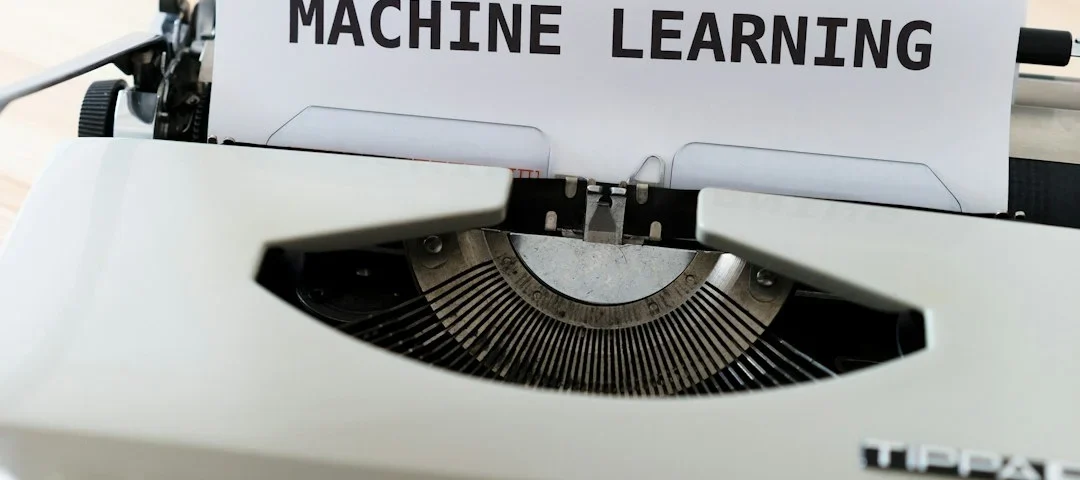
Photo by Markus Winkler on Unsplash · Photo by Evgeniy Alyoshin on Unsplash
Build your career with VELYON
Related reading
 Skills & CoursesMath for Machine Learning: Essential Guide for Beginners6 min read · November 14, 2026
 Skills & CoursesMachine Learning Fundamentals Course Roadmap for Beginners6 min read · November 14, 2026
 Skills & CoursesAI-Powered Web Development: The Best Beginner Learning Path6 min read · November 14, 2026
