

Learn AI Step by Step: Beginner Roadmap
Master artificial intelligence from scratch with a proven roadmap. Build practical skills, pick the right tools, and start your journey today.
 Nitesh Roy
7 min read

Key takeaways
- Learn basic Python syntax before diving into complex machine learning theory.
- Use free online resources and interactive notebooks to practice coding daily.
- Start with small public datasets to build your very first predictive model.
- Document your coding projects on GitHub to showcase your practical skills.
On this page
Figuring out how to learn artificial intelligence step by step as a beginner can feel overwhelming when everyone online talks about heavy calculus and complex neural networks. The truth is, you do not need a computer science degree or a math background to start building smart applications today. If you want a clear, practical path from absolute zero to creating your own working models, this structured roadmap will guide you through the exact concepts, tools, and projects you need.
What foundational math and programming do you actually need?
Focus on practical Python syntax rather than heavy theoretical computer science.
When you start your ai learning path, you want to write code quickly rather than spend months studying abstract computer science theories. Python is the absolute industry standard because it reads almost like plain English and has thousands of built-in libraries for data tasks. You only need to learn the basics: variables, loops, functions, and simple data structures like lists and dictionaries. Once you can write a short script that loops through a list of items or cleans up a messy text file, you have enough coding horsepower to start experimenting with machine learning frameworks.
Learn basic linear algebra and statistics that directly apply to machine learning concepts.
Forget about memorizing complex mathematical proofs or solving multi-page equations by hand. You just need an intuitive grasp of vectors, matrices, and basic descriptive statistics like means, medians, and standard deviations. For instance, understanding that a digital image is just a grid of numbers helps you see how an algorithm processes visual data. Similarly, knowing basic probability helps you understand why a spam filter flags certain emails with a ninety-five percent certainty score. If you want structured support while tackling these fundamentals, you might explore the Foundation Internship Programs for guided skill development.
How does machine learning differ from general AI?
Understand the core distinction between rule-based automation and machine learning models.
Traditional software relies on rigid, human-made rules where you tell the computer exactly what to do if a specific condition occurs. Artificial intelligence for beginners often starts by breaking this traditional mindset and looking at pattern recognition instead. Instead of writing a thousand rules to spot a cat in a photo, a machine learning model looks at thousands of pictures of cats and figures out the defining visual features on its own. This shift from hardcoded logic to probabilistic learning is what makes modern systems adaptable when they encounter brand new data.
Explore supervised versus unsupervised learning using real-world classification examples.
Supervised learning is like teaching a child with flashcards that have both the picture and the correct label attached. You feed a model historical house prices along with their actual sale features so it can learn to predict future prices. Unsupervised learning, on the other hand, is like giving an algorithm a pile of customer data without any labels and asking it to find natural groupings on its own. This second approach is great for customer segmentation, where shoppers with similar buying habits automatically form distinct clusters.
What are the best free resources to start building your skills?
Leverage open-source courses and interactive tutorials to gain hands-on coding practice.
You do not need to spend thousands of dollars on bootcamps to get a solid education in this field. Incredible beginner ai tutorial series, open-source documentation, and interactive code notebooks are available online for free. Platforms like Kaggle offer bite-sized micro-courses alongside real datasets where you can write code directly in your browser without installing anything on your laptop. Working through these free interactive modules daily builds your muscle memory and takes the intimidation out of writing your very first scripts.
Utilize community forums and documentation to debug code and collaborate with other learners.
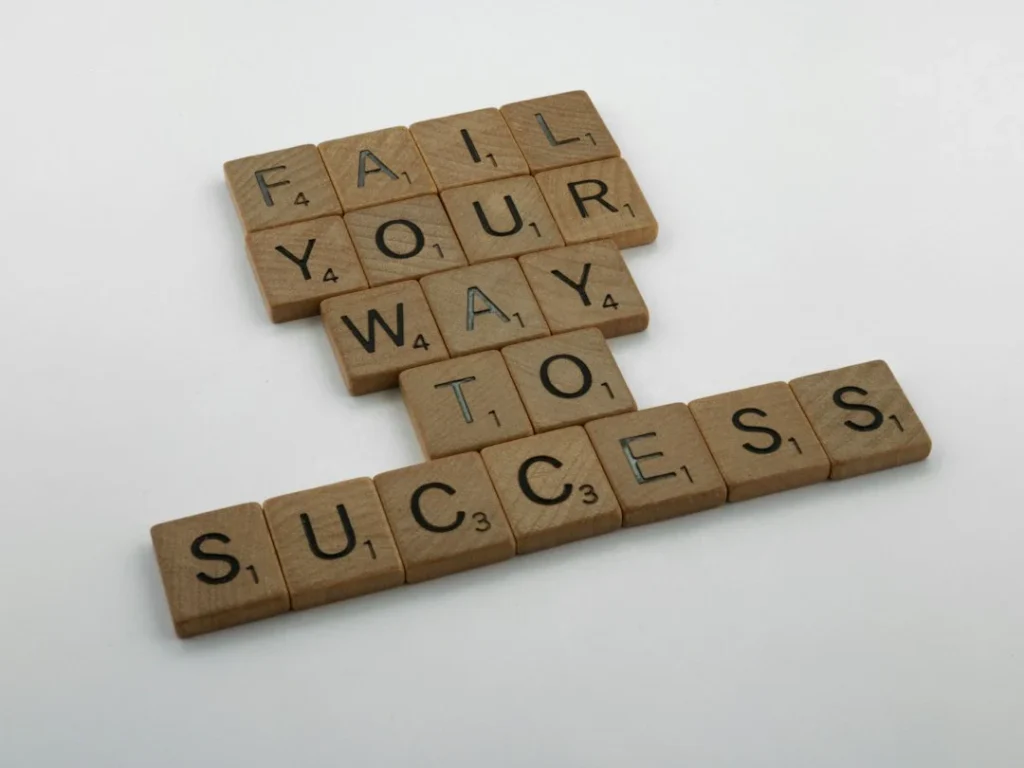
Getting stuck on cryptic error messages is a normal part of the journey, even for seasoned engineers. When your code throws a red error trace, copy the error text and paste it into developer forums like Stack Overflow or specialized AI Discord communities. You will usually find that dozens of other learners have hit that exact same roadblock and shared simple fixes. Tapping into these collective knowledge bases keeps your momentum going instead of leaving you stranded on a single stubborn bug.
How do you build your first AI project?
Start with a simple predictive model using a clean, pre-existing public dataset.
Theory only takes you so far until you build something tangible with your own hands. Pick a classic beginner project, like predicting passenger survival on the Titanic or forecasting local weather temperatures using historical numbers. Grab a clean CSV file from a public repository, load it into a Python script using pandas, and train a basic decision tree model. Seeing your script output an accurate prediction for the first time gives you an incredible confidence boost and cements the underlying concepts in your memory.
Document your workflow on GitHub to showcase your practical problem-solving ability.
Do not let your early code sit quietly hidden in a local folder on your hard drive. Push your project files, datasets, and a clear explanatory README file to a public GitHub repository. Writing a short explanation of what problem you solved, what tools you used, and what results you achieved makes your work visible to peers and mentors. As you progress, you can direct potential collaborators to your active dashboard, such as your Claim Your Free Portfolio page, to display your growing collection of completed builds.
How can you specialize in modern generative AI and LLMs?
Learn how prompt engineering and fine-tuning allow you to interact with large language models effectively.
Modern artificial intelligence extends far beyond simple numbers and classification tasks into creative text generation and reasoning. You can start exploring this world right now by mastering prompt engineering, which is simply the art of giving clear instructions, constraints, and examples to large language models. When basic prompting is not enough for a specific business task, you can look into lightweight fine-tuning to adapt a pre-trained model to a specialized writing style or internal company knowledge base.
Explore API integration to build custom text or image generation applications.
Connecting to external AI models through software application programming interfaces opens up endless possibilities for creative tools. You can write a small Python script that takes user input from a web form, sends it to a hosted model via an API, and displays a generated summary or image back on the screen. Building these small full-stack projects bridges the gap between raw machine learning theory and practical software products that people can actually use every single day.
Step-by-Step Implementation
- Install Python and Jupyter Notebook: Set up your local coding environment by downloading Anaconda or using a cloud-based notebook environment like Google Colab to write code without complex installations.
- Learn basic Python syntax: Spend a week practicing fundamental programming concepts like variables, loops, conditional statements, and functions until you feel comfortable writing simple scripts.
- Master pandas and NumPy: Practice loading, filtering, and manipulating tabular datasets using Python data science libraries to understand how computers handle raw information.
- Train your first model: Download a clean public dataset from Kaggle and build a basic supervised classification model using the popular scikit-learn library.
- Build a portfolio project: Create a complete end-to-end script that solves a real-world problem, write a clear project description, and upload your code to GitHub.
Frequently asked questions
Do I need a strong math background to learn artificial intelligence?
No, you do not need advanced calculus or formal linear algebra to get started as a beginner. A basic understanding of high school level statistics and simple logic is more than enough to build and deploy practical machine learning models.
How long does it take to learn artificial intelligence from scratch?
Most dedicated beginners can grasp the fundamentals and build their first working predictive models within three to six months of consistent part-time study and hands-on coding practice.
Should I learn R or Python first?
Python is widely considered the best choice for beginners because of its readable syntax, massive ecosystem of machine learning libraries, and widespread adoption across the entire tech industry.
Can I build AI projects on an ordinary laptop?
Yes, standard beginner projects use small datasets that easily run on regular consumer laptops without needing expensive graphics cards or specialized cloud hardware.
Next Steps
- Set up your free coding environment and write your very first Python script today.
- Explore the VELYON Insights – Blog & Knowledge Hub for more beginner guides and career tips.
- Pick one small public dataset and challenge yourself to build a basic predictive model this week.
Photo by Ecliptic Graphic on Unsplash · Photo by Brett Jordan on Unsplash
Build your career with VELYON
Related reading
 Skills & CoursesMath for Machine Learning: Essential Guide for Beginners6 min read · November 14, 2026
 Skills & CoursesMachine Learning Fundamentals Course Roadmap for Beginners6 min read · November 14, 2026
 Skills & CoursesAI-Powered Web Development: The Best Beginner Learning Path6 min read · November 14, 2026
