

Machine Learning Internship Projects for Beginners
Build your ML portfolio with beginner machine learning internship projects that impress recruiters and land entry-level AI roles.
 Nitesh Roy
7 min read

Key takeaways
- Build practical projects to prove applied machine learning skills.
- Start with clean, structured tabular data before tackling raw inputs.
- Keep project scopes small to finish tasks and avoid burnout.
- Write a clear README file that explains your methodology and results.
On this page
Quick Summary
- Discover how to build machine learning internship projects for beginners that impress recruiters and hiring managers.
- Learn how to choose the right project scope, find clean datasets, and avoid common beginner burnout traps.
- Explore actionable steps for documenting your code and showcasing your AI portfolio on LinkedIn and your resume.
- Find out how to structure your GitHub repository so hiring teams can easily review your machine learning workflow.
When you want to break into artificial intelligence, staring at a blank screen can feel pretty overwhelming. Building the right portfolio pieces changes everything, especially when you are trying to land your first role in the tech industry. That is why focusing on practical Machine Learning Internship Projects for Beginners will give you the exact confidence and technical proof you need to stand out.
Why are practical projects crucial for securing a machine learning internship?
Proving applied skills over theoretical knowledge
Anyone can memorize textbook definitions of linear regression or gradient descent. However, hiring managers care much more about whether you can actually clean messy data, train a model, and fix bugs when accuracy drops to thirty percent. Building real-world applications shows you know how to bridge the gap between classroom theory and production-ready code. It proves you have the grit to solve unpredictable problems independently.
Differentiating your resume from hundreds of other applicants
Recruiters look at hundreds of resumes every single week, and most of them list the exact same university coursework. When you include unique beginner ml portfolio projects on your application, you instantly give hiring teams something concrete to discuss. A well-constructed GitHub link tells a much stronger story than a bullet point about a school assignment. It shows genuine passion and proactive skill development.
How do you choose the right project scope for your skill level?
Starting with structured datasets before tackling raw data
Data cleaning is notoriously messy, and diving straight into web scraping or unstructured audio files can grind your momentum to a complete halt. Start your journey with clean, structured tabular data from platforms like Kaggle or the UCI Machine Learning Repository. This lets you focus entirely on learning model evaluation metrics, feature engineering, and hyperparameter tuning without getting bogged down by missing values or encoding errors.
Balancing complexity with completion time to avoid burnout
One of the biggest traps for aspiring data scientists is choosing an overly ambitious project, like building a custom large language model from scratch in a weekend. You end up overwhelmed, stuck, and eventually abandoning the repository altogether. Instead, aim for smaller projects you can finish from end-to-end within a week or two. Completing three simple projects feels infinitely better on a resume than having one massive, unfinished draft.
What are the best beginner-friendly machine learning projects to build?
Predictive modeling using tabular data like housing prices
Regression tasks are an absolute classic for a reason. Predicting housing prices, car valuations, or customer churn gives you a clear introduction to supervised learning. You get to practice handling numerical and categorical variables, scaling your features, and evaluating your predictions using Root Mean Squared Error or Mean Absolute Error. Plus, the business logic behind these tasks is super easy to explain during an interview.
Simple classification tasks using image or text datasets
Once you feel comfortable with tabular data, step up to a basic classification challenge. Building a spam email detector using Natural Language Processing or a handwritten digit classifier using computer vision adds wonderful variety to your portfolio. These projects introduce you to tokenization, basic neural networks, or libraries like Scikit-Learn and TensorFlow, opening up doors to structured foundation internship programs that offer guided mentorship.
How should you document and present your machine learning projects?
Writing clean, readable code with comprehensive documentation
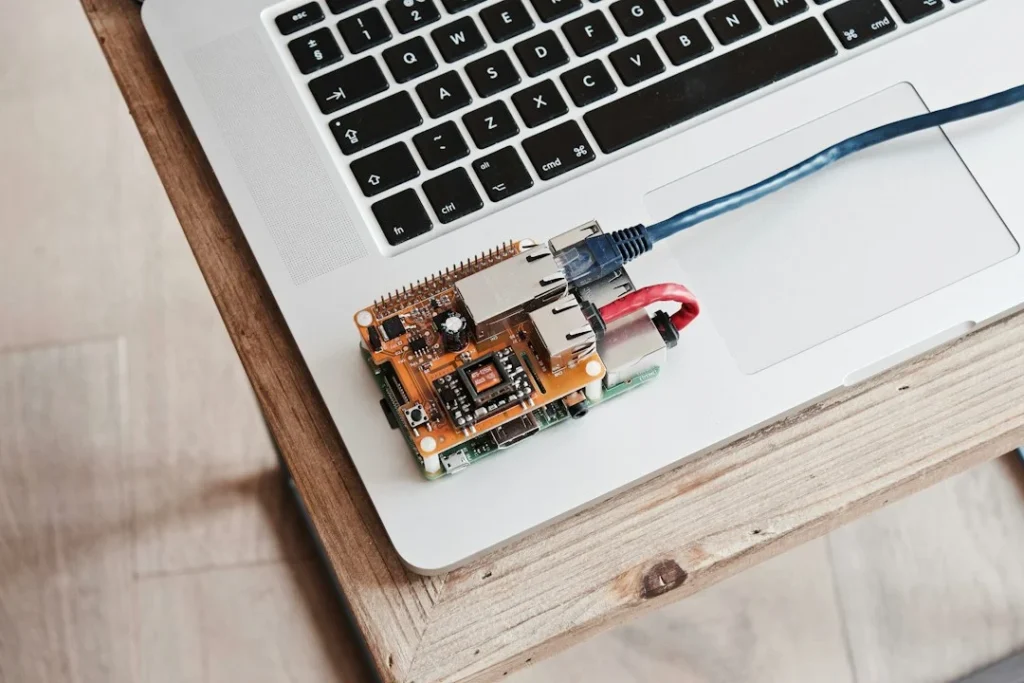
Your code might run perfectly on your local machine, but if another developer cannot understand what it does, it loses half its value. Take the extra time to write descriptive variable names, comment on tricky lines of logic, and organize your scripts into logical directories. Clean code reflects a professional mindset that engineering managers actively look for in interns.
Creating a clear README file that explains the problem and results
Your README file is the very first thing anyone sees when they visit your GitHub profile. Treat it like the front door to your project by explaining the business problem, your data preprocessing steps, the models you tested, and your final evaluation metrics. Including a few clear data visualizations or charts right inside the markdown file makes your repository infinitely more engaging.
How can you leverage your completed projects to land interviews?
Highlighting projects strategically on your resume and LinkedIn
Do not just list your project titles at the bottom of your resume like an afterthought. Dedicate a specific section to your projects, including bullet points that highlight the tools you used, the challenges you overcame, and the final model accuracy you achieved. Share your progress updates or milestone breakthroughs on LinkedIn to build your personal brand in the data science community.
Discussing your methodology and trade-offs during technical interviews
When an interviewer asks you about a project, they do not just want to hear that it worked. They want to know why you chose a specific algorithm, how you handled overfitting, and what you would do differently if you had more time. Being able to explain your design trade-offs with honesty and confidence is often the deciding factor that turns an initial screening call into a formal job offer.
Step-by-Step Implementation
- Do this: Select a well-documented dataset from Kaggle that matches your current comfort level with Python. Choose something you genuinely find interesting, like movie ratings or weather patterns.
- Do this: Set up a clean virtual environment and a new GitHub repository to keep your dependencies organized from day one. Good version control habits save hours of debugging later.
- Do this: Write your exploratory data analysis script to check for missing values, visualize distributions, and spot obvious correlations. Understanding your features before modeling is essential.
- Do this: Train a simple baseline model using Scikit-Learn to establish a performance floor that you can try to beat with more advanced algorithms.
- Do this: Tune your hyperparameters using cross-validation to make sure your model generalizes well to unseen data instead of just memorizing the training set.
- Do this: Write a comprehensive README file detailing your workflow, challenges faced, and final accuracy metrics so reviewers can follow your thought process easily.
- Do this: Publish your repository publicly and link it directly on your resume, portfolio website, and professional networking profiles.
Frequently Asked Questions
What math background do I need before building beginner machine learning projects?
You do not need a Ph.D. in mathematics to get started. A basic grasp of high school algebra, introductory statistics, and basic calculus concepts like derivatives is usually more than enough to understand how models learn from data.
How many projects should I have in my portfolio before applying for internships?
Quality matters much more than quantity when building your AI portfolio. Two or three thoroughly documented, end-to-end machine learning projects with clean code and clear explanations are much better than ten messy, unfinished repositories.
Should I use Jupyter Notebooks or Python scripts for my projects?
Jupyter Notebooks are fantastic for exploratory data analysis, data visualization, and step-by-step experimentation. However, structuring your final workflow into modular Python scripts shows professional software engineering maturity.
How can I prove that I built the project myself during an interview?
The best proof is being able to explain every single line of code and decision you made. If you understand why you chose a specific loss function or how you fixed an overfitting issue, interviewers will immediately know you did the work.
Next Steps
Pick one dataset today and set up your local development environment to write your first exploratory script. Keep your scope small, focus on finishing what you start, and document your learnings along the way.
Photo by Abhinav Anand on Unsplash · Photo by Louis Reed on Unsplash
 Internships
 Internships
 Internships
