

AI Engineering Internship Prep: A Beginner’s Guide
Land your first role by discovering how to prepare for an AI engineering internship as a beginner with practical coding skills and projects.
 Nitesh Roy
8 min read

Key takeaways
- Master Python syntax and basic data structures first.
- Learn foundational linear algebra and calculus for machine learning.
- Build unique projects that solve real-world problems.
- Deploy your models as web applications using Streamlit or FastAPI.
- Practice coding challenges and conceptual interview questions regularly.
On this page
Quick Summary
- Discover how to prepare for an AI engineering internship as a beginner by mastering fundamental programming, math, and machine learning concepts.
- Learn how to build a standout portfolio of real-world projects and deploy models using modern developer tools.
- Master effective resume strategies and technical interview preparation to land your first role.
- Explore structured pathways like foundation internship programs to gain hands-on experience.
Breaking into the tech industry can feel intimidating, especially when job descriptions ask for a laundry list of advanced skills you have never seen before. Figuring out how to prepare for an AI engineering internship as a beginner requires cutting through the noise and focusing on the core competencies that hiring managers actually care about. Let’s look at the exact steps you need to take to build a compelling profile and secure your first role.
What foundational programming and math skills do you actually need?
Mastering Python syntax, object-oriented programming, and efficient data structures
Python is the undisputed language of artificial intelligence, so you need to feel comfortable writing it every single day. Beyond basic syntax, you must understand object-oriented programming principles like classes, inheritance, and encapsulation because modern machine learning frameworks rely heavily on them. Do not skip data structures either. Knowing when to use a dictionary, a set, or a list can make or break your code when handling large datasets. Spend time practicing coding problems on platforms like LeetCode or HackerRank to build muscle memory around loops, functions, and recursion.
Understanding linear algebra, calculus, and probability basics for machine learning
You do not need a math PhD to build working models, but you do need a solid grasp of the math that powers them. Linear algebra is crucial because neural networks process data as matrices and vectors. You should understand matrix multiplication, dot products, and eigenvalues. Calculus matters because gradient descent—the optimization algorithm used to train models—relies on partial derivatives to minimize loss. Finally, probability and statistics help you evaluate model performance, handle uncertainty, and interpret distributions without guessing.
Which core machine learning and deep learning concepts should you study?
Grasping supervised versus unsupervised learning algorithms
Before jumping into complex neural networks, you need a firm grasp of classical machine learning algorithms. Supervised learning forms the backbone of predictive modeling, so you should understand how linear regression, logistic regression, decision trees, and random forests work under the hood. On the flip side, unsupervised learning deals with unlabelled data, making techniques like K-means clustering and principal component analysis essential for dimensionality reduction and data exploration. Knowing the limitations of each algorithm helps you choose the right tool for a given problem.
Learning neural network architectures using PyTorch or TensorFlow
Once you understand traditional algorithms, it is time to enter the world of deep learning. Start by building a simple multi-layer perceptron from scratch using NumPy to understand how forward and backward propagation work. Then, transition to an industry-standard framework like PyTorch, which is heavily favored in research and production. Learn how to construct convolutional neural networks for image processing and recurrent neural networks or transformers for sequence data. Getting hands-on with generative AI engineering concepts will also give you a massive edge in today’s job market.
How do you build a portfolio of AI projects that stands out?
Moving past basic tutorial clones to solve real-world problems
Every single applicant has a handwritten digit classifier or a basic sentiment analysis project on their resume. To catch a recruiter’s eye, your portfolio needs to feature original projects that solve messy, real-world problems. Pick a domain you genuinely care about, scrape your own data using Python, and build a model that provides actual utility. Whether it is predicting local housing prices using scraped real estate listings or analyzing customer feedback for a local business, uniqueness shows genuine passion and initiative.
Deploying models as web applications using FastAPI or Streamlit
A Jupyter Notebook sitting quietly in a GitHub repository does not prove you can build software. Engineering teams want to see that you know how to take a model out of the lab and put it into production. Learn how to wrap your trained models inside a lightweight API using FastAPI or build an interactive user interface using Streamlit. Deploying your application to a free hosting service allows anyone—including hiring managers—to test your project right in their browser with a single click.
What developer tools are essential for modern AI engineering?
Using Git and GitHub for version control and collaborative workflows
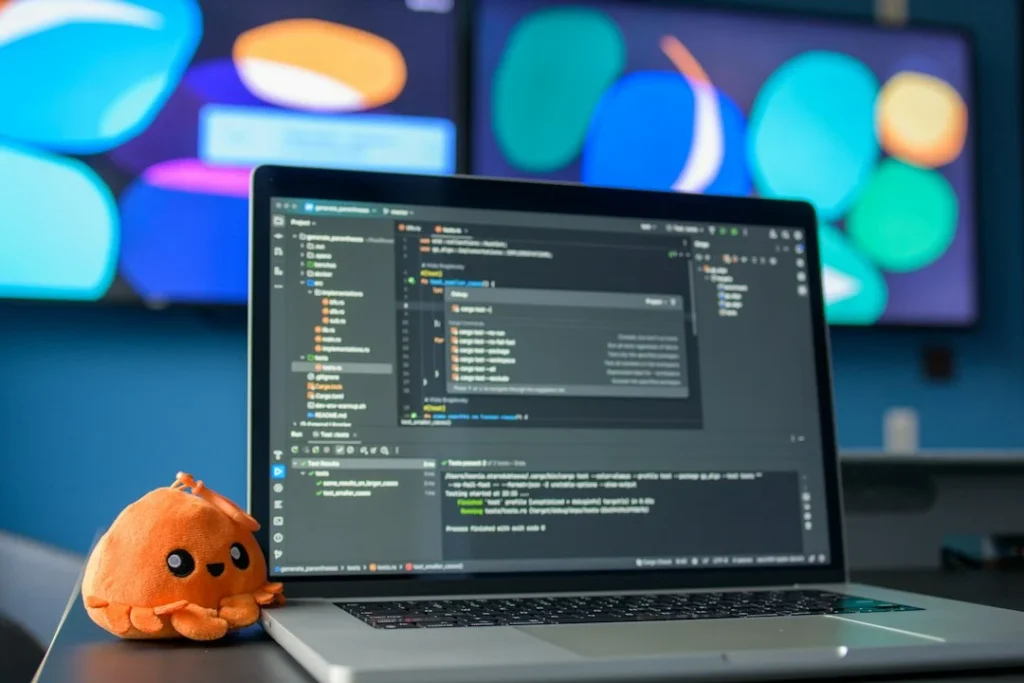
Writing code in isolation is a relic of the past, as modern engineering happens in teams spanning multiple time zones. You need to be fluent in Git commands like commit, push, pull, branch, and merge to manage code changes safely. Keeping a clean, active GitHub profile acts as your technical resume, showing your commit history, code quality, and problem-solving process. Make sure your repositories include detailed README files that explain what your project does, how to install dependencies, and how to run the code.
Working comfortably with Linux environments and Docker containers
Most production servers, cloud instances, and high-performance computing clusters run on Linux, so you should feel at home navigating the command line. Furthermore, learning Docker is non-negotiable if you want to avoid the classic “it works on my machine” nightmare. Containerization ensures that your machine learning model, dependencies, and environment run identically on your laptop and in the cloud. Mastering these foundational developer tools shows engineering teams that you can slot right into their existing workflows without hand-holding.
How should you approach technical interviews and resume screening?
Translating academic projects and coursework into impactful resume bullet points
Your resume is often your only shot at making a first impression, so every single word needs to pull its weight. Instead of listing vague responsibilities or generic course titles, use action-driven bullet points that highlight specific results and metrics. For example, writing “Developed a PyTorch image classification model that achieved 94% accuracy on custom test data” sounds infinitely better than “Learned about neural networks in class.” Keep your resume to a single page, format it cleanly without distracting graphics, and tailor your keywords to match the target internship description.
Preparing for coding assessments and conceptual machine learning questions
Technical interviews for machine learning roles usually combine standard software engineering tests with specialized conceptual questions. You should expect live coding rounds where you need to solve data structure problems while explaining your thought process out loud. Be ready to discuss the trade-offs between different algorithms, explain how to debug overfitting, and walk through how you would handle missing data in a dataset. Practicing mock interviews with peers will help calm your nerves and sharpen your technical communication skills.
Step-by-Step Implementation
- Do this: Master core Python programming and data structures by building small automation scripts and practicing coding challenges daily.
- Do this: Brush up on linear algebra and calculus fundamentals to truly understand how optimization and loss functions work.
- Do this: Build and train classical machine learning models on messy datasets using scikit-learn before touching deep learning frameworks.
- Do this: Learn PyTorch and build at least two unique deep learning models that go far beyond standard classroom tutorials.
- Do this: Package your best model into an interactive web application using Streamlit or FastAPI and deploy it online.
- Do this: Push all your clean code repositories to GitHub with descriptive README files and structured commit histories.
- Do this: Craft a concise, achievement-oriented resume that highlights your projects, tools, and quantifiable outcomes.
- Do this: Practice technical mock interviews and algorithm problems regularly to build confidence for live coding assessments.
Frequently Asked Questions
Do I need a master’s degree to get an AI engineering internship?
No, many companies gladly accept undergraduate students or self-taught developers who can prove their skills through a strong portfolio and solid technical interview performance.
What is the best programming language for beginners in artificial intelligence?
Python is universally recognized as the best language for AI due to its readability, massive ecosystem of libraries like Pandas and PyTorch, and active community support.
How many projects should I have in my portfolio before applying?
Two or three well-documented, fully deployed projects that solve actual problems are much better than ten unfinished tutorial clones cluttering your GitHub.
How do I gain experience if I have never worked in tech before?
You can build personal projects, contribute to open-source repositories, participate in hackathons, or join structured training and internship programs designed for beginners.
Next Steps
Pick one core area to focus on this week, whether that is brushing up on your Python data structures or drafting your first project idea. Set up a clean GitHub profile, start writing code every single day, and remember that consistent, small efforts compound into real career progress over time.
Photo by Nguyen Dang Hoang Nhu on Unsplash · Photo by Daniil Komov on Unsplash
 Internships
 Internships
 Internships
