

AI Internships for Beginners in India: Your Guide
 Nitesh Roy
8 min read

Key takeaways
- Learn Python and basic libraries before applying to internships.
- Build functional portfolio projects and host them live online.
- Use platforms like Wellfound and LinkedIn to find startup roles.
- Highlight GitHub repositories over coursework on your resume.
On this page
Quick Summary
- Securing an AI internship in India requires combining core Python programming with hands-on portfolio projects and active networking.
- This guide covers essential skills, project ideas, platform strategies, and interview preparation for beginners.
- You will learn how to bridge the gap between college theory and industry demands to land your first role.
- Proper preparation helps freshers transition smoothly into a sustainable AI career for students.
Breaking into the tech industry can feel like trying to board a moving train, especially when everyone around you is talking about machine learning and neural networks. If you are standing at the starting line wondering how to get your foot in the door, you are in the right place. Let’s look at how you can secure your first AI internship without losing your sanity.
Why pursue AI internships as a beginner in India?
High demand for AI talent across Indian startups and tech giants
Every company from Bangalore to Gurgaon wants to integrate intelligence into their products. This massive rush has created a massive supply gap for skilled hands. You do not need a master’s degree from an elite university to get noticed. Companies are actively hunting for fresh talent that can build, test, and deploy simple models quickly.
Bridging the gap between theoretical college education and practical industry needs
College textbooks teach you the math behind linear regression, but they rarely show you how to handle messy production data with missing values. An internship acts as a bridge between academic theory and the messy reality of writing code that actually runs. Working on real problems teaches you debugging habits that no lecture hall can ever replicate.
Building a professional network and securing full-time job conversions
Landing an internship is rarely just about the stipends or the certificate you print out at the end. It is about getting your work seen by people who make hiring decisions. Many organizations use these programs as extended interviews, converting interns into full-time engineers once they prove their worth. Your mentors today might become your future colleagues or referral sources tomorrow.
What core skills do you need before applying?
Proficiency in Python programming and essential libraries like NumPy and Pandas
Python is the undisputed lingua franca of the machine learning world. You need to be comfortable writing clean functions, handling loops, and understanding basic data structures. Once you have the basics down, you must learn how to manipulate arrays with NumPy and clean tabular data using Pandas. Mastering data manipulation is 80 percent of the job.
Foundational understanding of machine learning algorithms and deep learning frameworks
You don’t need to reinvent the transformer architecture on day one. However, you should understand how algorithms like decision trees, random forests, and logistic regression work under the hood. Familiarity with frameworks like PyTorch or TensorFlow will give you a massive head start when implementing pre-trained architectures. Knowing the core math helps you troubleshoot when your model outputs complete nonsense.
Familiarity with Generative AI tools, prompt engineering, and APIs like OpenAI
The industry has shifted rapidly toward large language models and multimodal systems. Knowing how to write effective system prompts and integrate third-party APIs into a simple Python script is a superpower for beginners. Explore specialized paths like the Generative AI Engineering & AI Agents Foundation Internship Program to build practical expertise in this domain. Prompt engineering combined with API integration lets you build working applications in a single weekend.
Which portfolio projects will catch a recruiter’s eye?
Building an end-to-end natural language processing chatbot using Hugging Face transformers
Anyone can write a three-line script that calls an API, but recruiters want to see how you handle context and user inputs. Pull an open-source model from Hugging Face, fine-tune it slightly on a domain-specific dataset, and wrap it in a clean interface. Showcasing a complete pipeline proves you understand more than just copying code from tutorials.
Developing a predictive analytics dashboard using real-world datasets from Kaggle
Go to Kaggle, download a messy dataset about Indian housing prices or retail sales, and clean it up. Build exploratory data analysis notebooks that tell a compelling story through visualizations. Clean data storytelling catches the eye of hiring managers who want to see business sense mixed with technical skill.
Deploying a lightweight AI model locally or on a cloud platform like Streamlit
A model that only lives in a Jupyter notebook is useless to a business stakeholder. Learn how to wrap your Python code in a web framework like Streamlit and host it for free. Live deployment links on your resume give interviewers something tangible to click and test immediately.
Where can beginners find and apply for AI internships in India?
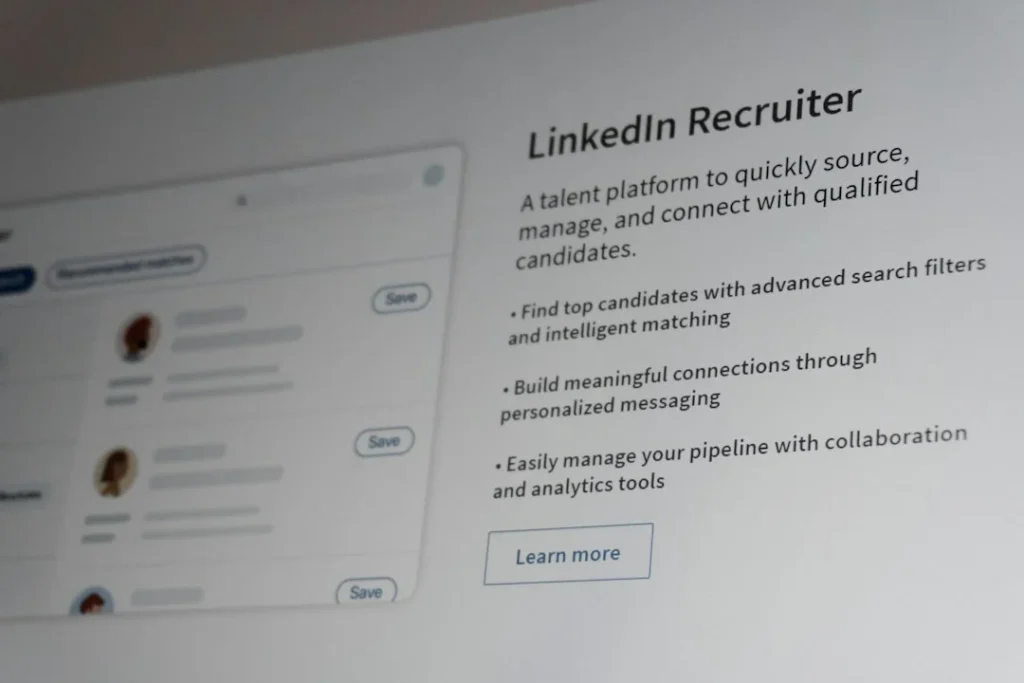
Leveraging LinkedIn and specialized job portals like Internshala and Wellfound
Stop scrolling endlessly and start setting up targeted keyword alerts for entry-level roles. Platforms like Wellfound are fantastic for finding early-stage startups that hire beginners without rigid corporate filters. Optimizing your profile with relevant keywords ensures recruiters find you when they search for fresh talent.
Networking with AI professionals and researchers through local tech meetups and hackathons
India’s tech hubs host weekend meetups, AI workshops, and hackathons almost every week. Showing up in person and talking about what you are building opens doors that online applications never will. Building real connections often leads to internal referrals that bypass the resume black hole.
Applying directly to AI-first startups offering mentorship and remote opportunities
Large multinational corporations often have bureaucratic hiring hurdles for freshers. Smaller AI startups, on the other hand, care more about your hustle and GitHub commits than your college tier. Targeting boutique startups guarantees you will get direct mentorship from senior engineers.
How should you prepare your resume and ace the interview?
Formatting your resume to highlight GitHub repositories and live project links over coursework
Recruiters spend less than ten seconds scanning a fresher resume, so make your projects scream louder than your GPA. Put your GitHub and live demo links right at the top under a dedicated projects section. Demonstrating working code matters far more than listing every computer science elective you ever took.
Preparing for common technical questions regarding data structures, algorithms, and basic ML theory
Brush up on basic data structures, dictionary lookups, and time complexity because coding rounds still happen. Be ready to explain bias-variance tradeoff, overfitting, and evaluation metrics in plain English. Clear conceptual clarity beats memorizing complex mathematical proofs every single time.
Demonstrating curiosity, problem-solving abilities, and a willingness to learn on the job
Interviewers know you don’t know everything yet, and pretending you do is a massive red flag. Show genuine enthusiasm for the company’s product and ask smart questions about their data pipelines. Showing a growth mindset is the ultimate differentiator for candidates competing for entry-level roles.
Step-by-Step Implementation
- Do this: Master Python fundamentals and practice basic data manipulation using Pandas and NumPy for at least three weeks.
- Do this: Build and host two distinct end-to-end projects on GitHub, complete with clear documentation and live demo links.
- Do this: Clean up your LinkedIn profile, add your projects to your featured section, and start connecting with local AI engineers.
- Do this: Explore structured learning pathways like the Foundation Internship Programs to gain guided hands-on experience.
- Do this: Draft a concise one-page resume focusing heavily on your practical builds rather than academic achievements.
- Do this: Apply to at least ten curated roles every week across platforms like Wellfound, Internshala, and LinkedIn.
- Do this: Practice explaining your code out loud to prepare for technical interviews and live debugging rounds.
Frequently Asked Questions
Do I need a computer science degree to get an AI internship in India?
No, your degree matters much less than your proof of work. Recruiters care if you can write working Python code and build functional models, regardless of whether you studied mechanical engineering or commerce.
How much programming experience do I need before applying?
You should be comfortable writing scripts from scratch, handling loops and functions, and working with APIs. If you struggle with basic syntax or debugging loops, spend a few more weeks coding daily before sending out applications.
Are paid AI internships common for freshers in India?
Yes, many startups and tech companies offer stipends for interns who bring baseline technical skills to the table. However, prioritize learning and mentorship over the stipend amount for your very first role.
How can I showcase my AI projects if I have no professional experience?
Publish all your code repositories on GitHub with detailed README files explaining the problem, your solution, and how to run it. Deploy your web apps using free hosting platforms so anyone can test your work instantly.
Next Steps
Pick one project idea from this guide, open up your code editor, and build a working prototype this weekend. Update your online profiles, put your code on GitHub, and start applying to beginner-friendly roles.
Photo by Daniël Brown on Unsplash · Photo by Zulfugar Karimov on Unsplash
 Careers & Jobs
 Careers & Jobs
 Careers & Jobs
