

SEO Internship Skills & Beginner Tasks Master Guide
 Nitesh Roy
7 min read

Key takeaways
- Understand how search engines crawl, render, and index web pages.
- Learn how to find target keywords using research tools and match search intent.
- Optimize on-page elements like title tags, header tags, and images.
- Run site health checks to fix broken links and improve mobile speed.
- Track performance metrics using search console and analytics data.
On this page
Landing your first digital marketing internship is a huge milestone. But let’s be honest—stepping into an optimization role can feel totally overwhelming if you don’t know what to expect. Sure, online courses give you the theory. Yet agency and in-house teams really want to know one thing: can you actually execute day-to-day tasks? Prepping for interviews or walking into your first week on the job gets a whole lot easier when you nail down the right SEO internship skills and practical tasks for beginners. That’s the fastest way to turn from a nervous newcomer into an indispensable team member. Let’s break down the exact technical abilities, routine responsibilities, and portfolio strategies you actually need to thrive.
Essential Foundational SEO Skills Every Beginner Must Master
Before you start tweaking web pages or pulling keyword reports, you need to understand how search engines actually operate. Without that mental model, your optimization efforts are just shots in the dark.
- Understanding how search engines crawl, render, and index web pages: You have to learn the three-step lifecycle of a search engine. Crawling is how Googlebot discovers your pages via links. Rendering is how it executes JavaScript and reads the layout. Indexing? That’s how it stores the information in its massive database. If a page fails any of these steps, it simply won’t rank.
- Grasping search intent variations including informational, navigational, commercial, and transactional: People search with different goals in mind. Informational queries seek answers (“how to tie a tie”). Navigational queries look for a specific site (“Nike login”). Commercial intent explores options (“best running shoes”), while transactional queries mean the user is ready to buy (“buy Nike Air Max size 10”). Matching your work to these intents is non-negotiable.
- Familiarity with core ranking factors and Google’s E-E-A-T framework: Google evaluates Experience, Expertise, Authoritativeness, and Trustworthiness to serve high-quality content. As an intern, you’ll often audit content to make sure it demonstrates clear subject-matter authority and credible sourcing.
Mastering Keyword Research and Search Intent Analysis
Keyword research is usually one of the very first beginner SEO tasks tossed your way. Honestly, it’s the compass that guides all content creation.
- Using tools like Google Keyword Planner, Ahrefs, or SEMrush to find target terms: Learn how to plug in seed keywords, filter by search volume, and unearth long-tail variations your audience is actively typing into the search bar.
- Analyzing keyword difficulty and search volume relative to domain authority: Just because a keyword gets 50,000 searches a month doesn’t mean you should target it. You’ll learn to compare difficulty scores against your website’s actual strength to find low-hanging fruit you can win.
- Mapping keywords to specific stages of the user journey and content funnel: Organize your keyword lists into top-of-funnel (blog posts, guides), middle-of-funnel (comparison pages, product features), and bottom-of-funnel (pricing, checkout pages) categories so the content strategy actually makes sense.
Executing On-Page SEO and Content Optimization Tasks
Once you know what terms to target, you have to optimize the actual on-page elements so both users and bots can understand what the page is about.
- Writing compelling, click-worthy title tags and meta descriptions within character limits: Craft concise titles (under 60 characters) and meta descriptions (under 155 characters). Include primary keywords while making people actually want to click from the search results page.
- Structuring content hierarchically using proper H1, H2, and H3 tag conventions: Every page needs one clear H1 tag, followed by logically nested H2s for main sections and H3s for sub-points. This makes the text readable for humans and scannable for crawlers.
- Optimizing images with descriptive file names and strategic alt text: Stop using generic names like “image1.png” and switch to descriptive ones like “red-running-shoes.png.” Write concise alt text that aids accessibility and image search rankings, too.
Navigating Technical SEO Audits and Site Health Checks
Technical performance keeps the engine running smoothly. Even the best content will fall flat if the site has deep-seated technical roadblocks.
- Identifying and fixing broken internal and external links (404 errors): Run regular site crawls to catch dead links. They create frustrating dead ends for users and waste valuable search engine crawl budget.
- Checking and improving mobile responsiveness and page loading speed bottlenecks: Use tools like Google PageSpeed Insights to spot oversized images, bloated scripts, or layout shifts that ruin the mobile user experience.
- Auditing XML sitemaps and robots.txt files for crawling obstructions: Make sure your sitemap is current and submitted correctly, and double-check that your robots.txt file isn’t accidentally blocking critical pages from being indexed.
Off-Page SEO and Link Building Tasks for Interns
Off-page optimization is all about building your site’s authority across the wider web. During a digital marketing internship, you’ll likely assist with foundational outreach and keeping tabs on brand mentions.
- Conducting competitor backlink gap analysis to find outreach opportunities: Find websites linking to your top competitors but ignoring you. Boom—instant prioritized prospect list.
- Drafting professional email pitches for guest blogging and digital PR: Learn how to write personalized, value-driven outreach emails. You want to secure high-quality backlinks and media mentions without triggering spam filters.
- Monitoring brand mentions and turning unlinked mentions into active backlinks: Track where your brand is discussed online and politely reach out to webmasters to request an active link where it makes sense.
Using Google Search Console and Analytics for Performance Tracking
Data drives every smart SEO decision. You’ve got to learn how to measure the impact of your optimizations.
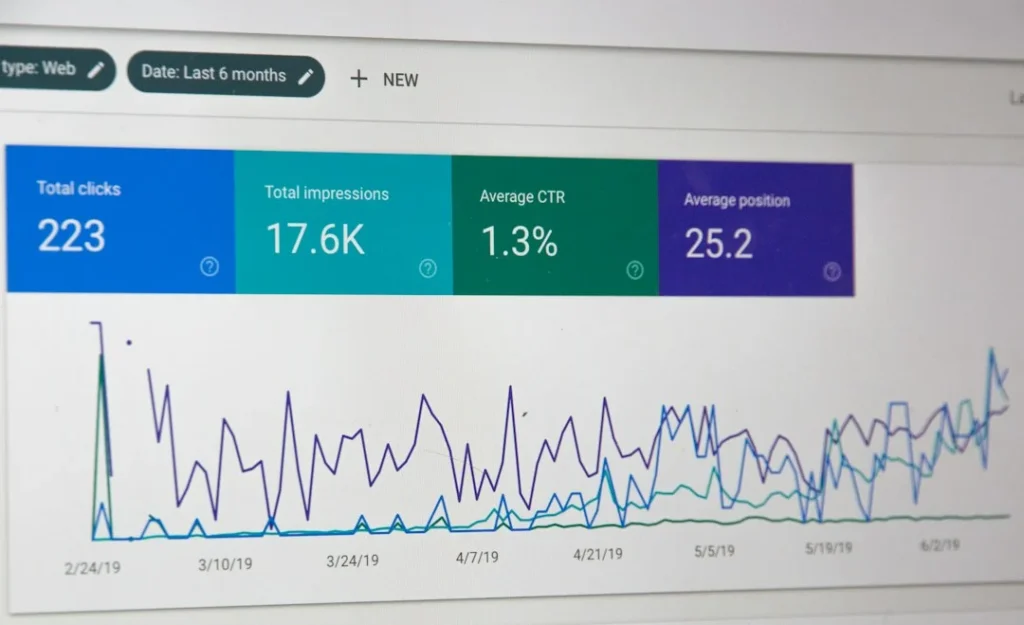
- Tracking keyword rankings, impressions, and click-through rates (CTR) in GSC: Monitor how your target terms climb the SERPs and figure out which queries drive the highest visibility.
- Identifying underperforming pages with high impressions but low clicks: Find pages that show up in search results but fail to pull in clicks. That’s your cue that the title tags or meta descriptions need immediate love.
- Reporting organic traffic growth and user behavior metrics using GA4: Jump into Google Analytics 4 to evaluate user engagement, session duration, and conversion rates coming directly from organic search.
How to Turn Practical Internship Tasks Into a Killer SEO Portfolio
When your internship wraps up, you need tangible proof of your abilities to land a full-time job. Building a standout SEO portfolio project bridges the gap between what you learned and what you can actually deliver.
- Documenting before-and-after case studies of optimized web pages: Take screenshots and record metrics showing how your meta tag updates or content restructurings improved rankings and organic traffic over time.
- Creating a personal blog or sandbox site to test live technical and on-page fixes: Spin up your own WordPress or static site to experiment with schema markup, site speed tweaks, and internal linking strategies without risking a client’s live environment.
- Presenting keyword research reports and traffic projection models to hiring managers: Package your strategic keyword maps and projected traffic growth models into a clean, professional slide deck that shows you understand the business side of search marketing.
Conclusion
Succeeding in search marketing takes a mix of technical curiosity, analytical thinking, and hands-on execution. By mastering foundational concepts, technical audits, optimization workflows, and tracking methods, you’ll move past the learning curve with total confidence. Document your wins, keep experimenting in sandbox environments, and use your newly minted skills to build an impressive portfolio that proves your value to any future employer.
Photo by Redmind Studio on Unsplash · Photo by Stephen Phillips – Hostreviews.co.uk on Unsplash
 Skills & Courses
 Skills & Courses
 Skills & Courses
