

Professional Body Language Tips for Job Interviews
Master non-verbal communication with these professional body language tips for job interviews and project absolute confidence to recruiters.
 Nitesh Roy
9 min read
Key takeaways
- Maintain an upright posture to project instant confidence.
- Keep your hands visible and use purposeful gestures.
- Apply the 50/70 rule for natural eye contact.
- Position your webcam at eye level for video calls.
On this page
Quick Summary
- Mastering non-verbal communication in interviews helps you project instant confidence and credibility.
- Learn how to sit in a job interview, manage hand gestures, and maintain natural eye contact.
- Discover practical interview posture and gestures that impress hiring managers every time.
- Adapt your virtual interview body language to shine brightly through video calls.
Preparing for a job interview involves much more than just memorizing talking points about your past experience. When you walk into a room or log onto a video call, your physical presence speaks volumes before you even say hello. Utilizing professional body language tips for job interviews can easily tip the scale in your favor when competing against other qualified candidates.
How to Master Your First Impression Before You Speak
The importance of an upright posture upon entering the room
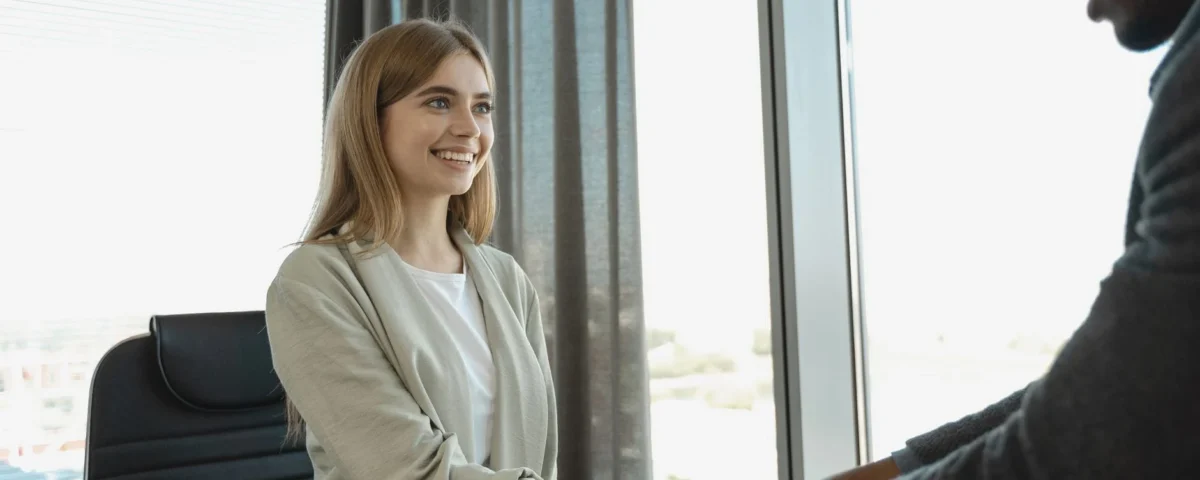
The moment you step through the door, recruiters start forming opinions based on your physical presence. Walking with your head up and shoulders back signals high self-esteem and readiness for the challenge ahead. Avoid slouching or looking down at your phone as you enter the building. Instead, move with purpose and poise, showing that you respect both your own time and the interviewer’s time.
Executing a firm and confident handshake
A classic greeting remains a cornerstone of strong non verbal communication in interviews. Extend your hand with your palm at a vertical angle, neither entirely upward nor downward. Aim for a firm grip that matches the pressure of the person greeting you, lasting about two to three seconds. Pair this gesture with a genuine smile and direct eye contact to establish instant rapport.
Establishing calm and welcoming facial expressions early on
Nerves often cause people to lock their facial muscles into a tense or unreadable expression. Combat this by taking a deep breath in the waiting area and consciously relaxing your jaw. A relaxed, welcoming face shows that you are approachable and emotionally intelligent. When you greet the hiring manager, let a natural smile light up your eyes to set a warm tone for the conversation.
What Does Your Posture Say About Your Confidence?
Avoiding slouching to prevent appearing disengaged
Slouching back deep into your chair sends a subconscious message that you are bored, tired, or unprepared. Sitting upright tells the room that you are alert and ready to engage with complex questions. Keep your spine aligned with the back of the chair while leaving a slight gap if it helps you stay balanced. Good physical alignment keeps your energy levels high throughout the meeting.
Leaning in slightly to demonstrate active listening and interest
Knowing how to sit in a job interview is a subtle art that balances comfort with alertness. Leaning your torso forward by just an inch or two when the recruiter speaks shows deep engagement. It communicates that you value their insights and want to catch every detail of what they are saying. Just be careful not to lean so far forward that you invade their personal space.
Keeping shoulders relaxed to reduce visible tension
Anxiety often causes shoulders to creep up toward the ears, creating a stiff and robotic appearance. Consciously dropping your shoulders helps you breathe easier and look far more natural. When your upper body stays relaxed, you prevent physical tension from leaking into your voice. Practicing this simple adjustment makes you feel calmer on the inside while looking completely composed on the outside.
How to Use Hand Gestures Without Overwhelming the Recruiter
Keeping hands visible and resting them naturally on the table or lap
Hiding your hands in your pockets or beneath the table can make hiring managers feel uneasy or suspicious. Keep your hands resting comfortably on the table or your lap where they remain visible. This openness signals honesty and transparency, building trust during critical conversation moments. Visible hands also make it much easier to transition into natural conversational movements.
Using purposeful gestures to emphasize key talking points
Thoughtful hand movements help bring your stories and achievements to life. Use open palms and moderate gestures to highlight important metrics or milestones in your career. Keep your hand movements within the frame of your torso rather than flailing your arms outward. When used sparingly, gestures add energy and authenticity to your spoken answers.
Avoiding distracting nervous habits like pen clicking or hair touching
Repetitive fidgeting is one of the quickest ways to distract a recruiter from your actual qualifications. Keep pens away from your fingers if you tend to click them under pressure. Avoid touching your face, adjusting your glasses every minute, or playing with your hair. If you feel restless energy building up, channel it into keeping your feet flat on the floor.
Why Eye Contact is Your Most Powerful Negotiation Tool

Maintaining natural, non-aggressive eye contact with hiring managers
Locking eyes shows honesty, confidence, and intense focus on the discussion. However, staring unblinkingly can quickly become uncomfortable for the person across from you. Think of eye contact as a warm conversation rather than a staring contest. Glance away naturally for a second or two when pondering a difficult question before looking right back up.
Applying the 50/70 rule for listening versus speaking
A proven strategy in professional settings is to maintain eye contact about 50 percent of the time while you are speaking, and roughly 70 percent of the time while you are listening. This ratio proves you are absorbing their words without feeling overly intense. It gives your eyes natural breaks while keeping the connection strong and steady. Mastering this rhythm takes practice, but it yields incredible results in building rapport.
Managing gaze shifts during panel interviews to include everyone
When facing a panel of multiple interviewers, avoid the temptation to look only at the person who asked the question. Direct your answer primarily to the person who spoke, but sweep your gaze to include the other panel members as you make broader points. This inclusive approach shows you value the entire team and possess strong leadership communication skills. It proves you can manage multiple stakeholders with grace and poise.
How to Adapt Your Body Language for Video Interviews
Positioning your webcam at eye level to simulate face-to-face interaction
Looking up or down at a poorly angled laptop camera creates an unnatural dynamic. Elevate your laptop or webcam so the lens sits right at your eye level. This simple adjustment ensures you look straight ahead, mimicking the exact posture of an in-person meeting. It prevents you from looking down on the interviewer or appearing small and timid.
Looking at the camera lens instead of the screen when speaking
When you want to make a strong point during a virtual chat, look directly into the camera lens rather than at the interviewer’s face on your monitor. This creates the illusion of direct eye contact for the person on the other end. While you should spend most of your time looking at the screen to read their facial expressions, use the lens trick for your opening and closing remarks. It leaves a remarkably sharp, memorable impression.
Maintaining an open upper-body posture despite the framing limits
Virtual framing limits your visibility, but your upper body still communicates vital energy. Sit up straight, keep your shoulders back, and avoid slouching against the back of your office chair. Keep your workspace clear so you do not hunch over to see around clutter. Strong virtual interview body language translates clearly through a screen and sets you apart from candidates who treat video calls too casually.
Step-by-Step Implementation
- Do this: Practice your walk and posture in front of a full-length mirror for five minutes each day before your interview week. This builds muscle memory for standing tall naturally.
- Do this: Record a mock interview video on your phone to check your hand gestures and facial expressions. Reviewing the footage helps you spot nervous habits instantly.
- Do this: Set up your webcam, lighting, and chair position the evening before a video call. Testing your setup eliminates technical stress and lets you focus on your physical poise.
- Do this: Take three deep belly breaths right before entering the interview room or clicking the video link. This lowers your heart rate and relaxes your shoulders.
- Do this: Keep both feet flat on the floor during the entire conversation to anchor your posture. It prevents slouching and keeps your core engaged.
- Do this: Practice the 50/70 eye contact rule with a friend during a mock conversation. Finding the right balance prevents staring while showing deep engagement.
Frequently Asked Questions
What should I do with my hands during a job interview?
Keep your hands visible and resting naturally on the table or your lap. Use gentle, purposeful gestures to emphasize your points, and avoid touching your face, hair, or holding objects you might fidget with.
How can I stop slouching when I get nervous?
Combat slouching by keeping both feet flat on the floor and engaging your core slightly. Imagining a string pulling the crown of your head upward helps maintain a straight spine without feeling overly stiff.
Is eye contact different in a video interview?
Yes, to simulate eye contact on camera, you must look directly into the webcam lens when delivering key points rather than looking at the person’s image on your screen.
How do I handle a firm handshake if my hands get sweaty when nervous?
Wipe your palms discreetly on your trousers or a tissue right before entering the room or meeting your interviewer. Keeping a small tissue in your pocket can be a lifesaver during high-stakes days.
Next Steps
Review your upcoming interview schedule and pick one specific non-verbal habit to improve this week. Practice your posture and hand gestures daily, and explore more career guides on our platform to sharpen your overall presentation.
Photo by Tima Miroshnichenko on Pexels · Photo by GMB Fitness on Unsplash
 Interview Prep
 Interview Prep
 Interview Prep
